Before choosing a college or university, most students may have already formed impressions through social media. Campus videos, student stories, and everyday moments shared online often shape how an educational institution/ school is perceived.
Social media has become an essential marketing tool for schools and colleges.
When implemented with the appropriate social media marketing strategy, these efforts can help institutions build credibility, strengthen student recruitment, and improve enrolment outcomes.
Why Is Social Media Marketing Important for Educational Institutions
Understanding the importance of social media is essential for colleges and universities today. Potential students (usually) spend a significant amount of time on these platforms, and often, they tend to explore and go through the social profiles of potential universities and compare campus experiences.
A strong online social presence allows institutions to:
- Increase visibility among potential students
- Showcase authentic campus culture
- Highlight academic programmes and institutional achievements
- Strengthen communication with students, parents, and stakeholders
- Support student enrolment and admission
Unlike traditional advertising, social media also enables real-time interaction. Students can comment on posts, ask questions, and join community discussions (Telegram). These data and feedback help institutions build a strong foundation of trust and engagement early in these students’ decision-making journey.
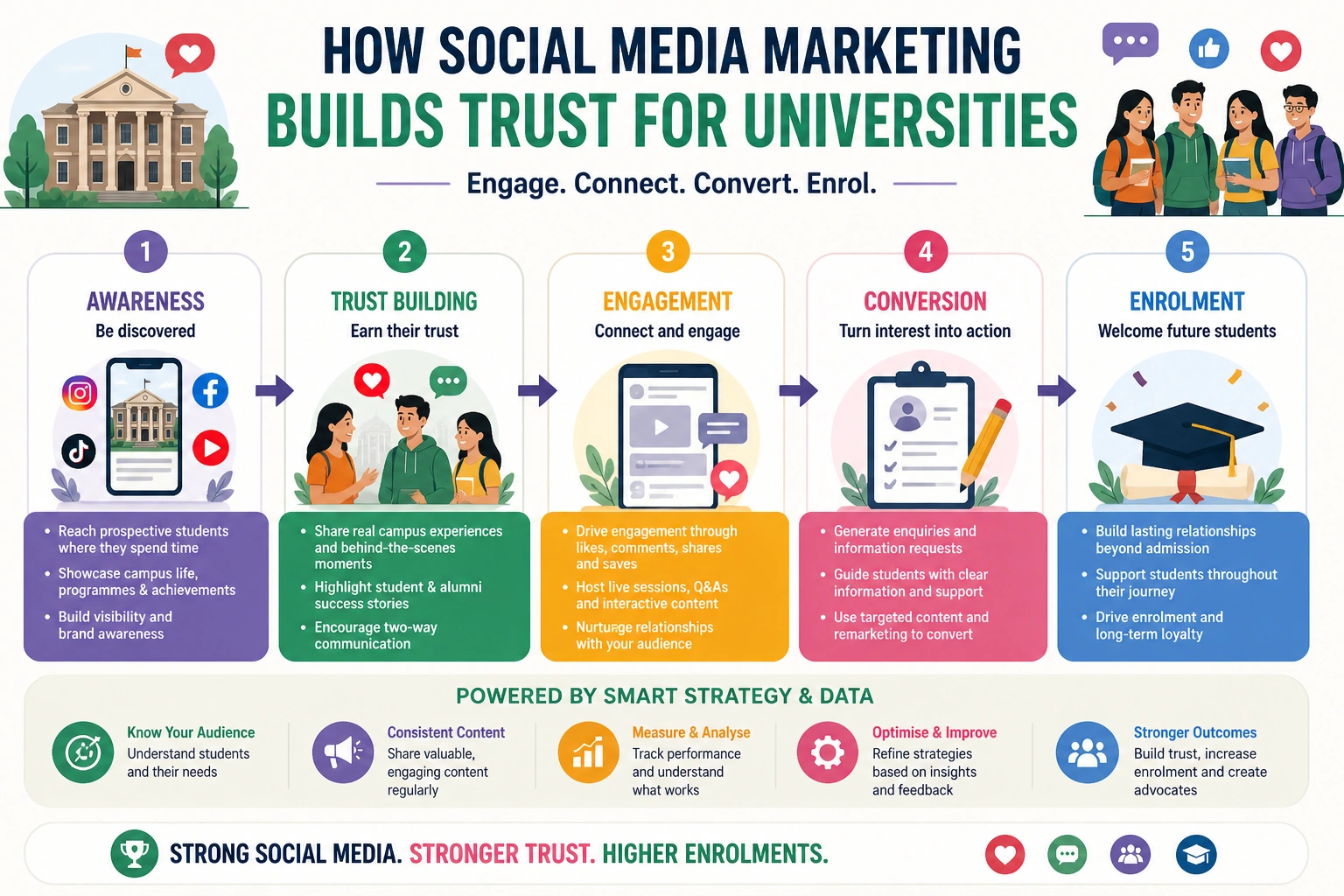
How Does Social Media Build Trust With Prospective Students?
Trust plays a major role when students evaluate universities. Through effective social media, institutions can communicate their values, culture, and academic strengths more authentically.
Showcasing Real Campus Experiences
- Students want to understand what everyday life on campus looks like. Sharing authentic content through images and videos helps institutions showcase their environment and community.
- Visual storytelling on platforms like Instagram helps resonate with younger audiences while strengthening the institution’s brand identity.
- Authentic posts give potential students a realistic view of the learning environment and help them imagine themselves as part of the campus community.
Highlighting Student and Alumni Success Stories
Another powerful approach is sharing success stories. Educational institutions can highlight:
- Career achievements of graduates
- Research breakthroughs by faculty members
- Student awards and academic achievements
- Innovation and cutting-edge initiatives
These stories strengthen institutional reputation while demonstrating the projected outcomes of the university experience.
Encouraging Two-Way Communication
One of the strongest advantages of social media for schools is the ability to create meaningful, two-way interaction. Through social media interaction, students can:
- Ask questions about admission requirements
- Participate in live Q&A sessions
- Engage with student ambassadors
- Comment on posts and discussions
Quick and transparent responses show that institutions value communication. These interactions also help establish meaningful connections even before students apply.
What Are Effective Strategies for Schools and Colleges?
To achieve strong engagement, institutions need a structured marketing plan supported by consistent social media management. A successful approach typically includes:
| Strategy | Example Content | Goal |
|---|---|---|
| User-generated content | Student vlogs, campus takeovers | Build authenticity |
| Behind-the-scenes storytelling | Faculty interviews, lab tours | Showcase academic value |
| Live engagement | Admission webinars, Q&A sessions | Increase enquiries |
| Short-form video | Campus highlights, student life reels | Boost reach and impressions |
Authenticity is critical. Today’s students respond strongly to genuine content to polished promotional campaigns. A well-planned social media marketing campaign helps institutions attract students while strengthening their brand and presence.
Which Social Media Platforms Work Best for Education Marketing?
Different social media platforms support different goals within education marketing.
| Platform | Best Use in Education Marketing |
|---|---|
| Campus life, student stories, visual images and videos | |
| Events, community updates, parent communication | |
| Academic accomplishments, alumni success, research highlights | |
| TikTok / Reels | Short-form videos showcasing campus culture |
By tailoring content to each platform, institutions can reach diverse demographics and expand their outreach. Furthermore, social media aids communication with the needs of future students, alumni, and institutional stakeholders.
How Can Universities Measure the Success of Social Media Marketing?
Tracking performance ensures that social media campaigns support broader marketing and admission goals. Common metrics include:
- Social media engagement (likes, comments, shares)
- Content reach and impressions
- Website traffic from social media platforms
- Lead generation and enquiry submissions
- Enrolment and admission interactions
Tools such as social media analytics dashboards and Google Analytics help marketing teams understand audience behaviour.
With these data and insights, institutions can optimise campaigns, refine messaging, and improve the performance of future digital marketing initiatives.
How Can Social Media Help Institutions Build a Strong Digital Presence?
Successful social media marketing for schools requires consistency, approach, and clear messaging.
Institutions that maintain a strong digital footprint often focus on:
- Identifying the right target audience
- Maintaining a consistent brand identity
- Publishing engaging content regularly
- Encouraging participation from students and faculty members
- Using social media analytics to refine campaigns
When social media marketing is integrated with broader digital marketing strategies, such as retargeting, website optimisation and search results visibility, it becomes a powerful driver of student enrolment and institutional growth.
A well-managed online presence helps institutions elevate their reputation while creating stronger connections with their academic community.
Ready to Strengthen Your Institution’s Social Media Strategy?
Building trust in the digital age requires more than occasional posts. It requires a structured social media marketing strategy that aligns with institutional goals.
With the right approach, social media campaigns can increase visibility, strengthen student admissions, and build lasting trust and engagement with potential students.
For institutions looking to improve their digital presence, working with experienced digital specialists can help transform social media into a powerful brand-building channel.
FAQ About Social Media Marketing for Colleges and Universities
Education marketing focuses heavily on trust, community, and institutional reputation. Unlike traditional consumer marketing, colleges and universities must emphasise academic excellence, campus culture, and graduate outcomes.
Through social media outreach, institutions can communicate these values authentically by sharing success stories, student experiences, and faculty accomplishments.
Many institutions build structured content calendars that include themes such as student life, campus culture, academic programmes, research, faculty accomplishments, student activities, and events.
Encouraging students and alumni to contribute images and videos also helps maintain a steady stream of authentic, engaging content.
Yes. Smaller institutions can stand out by focusing on authenticity and personalised experiences.
By highlighting niche programmes, supportive learning environments, and close-knit communities, smaller schools can create successful social media campaigns that resonate strongly with prospective students.
With the right strategies, even smaller institutions can build a strong digital presence, strengthen brand identity, and improve student recruitment outcomes.